// Affiliate disclosure: some of the links in this post are affiliate links, which means we may earn a small commission if you buy through one, at no extra cost to you. And if you do, that money goes straight to our knife problem (or beer money, let's be honest).
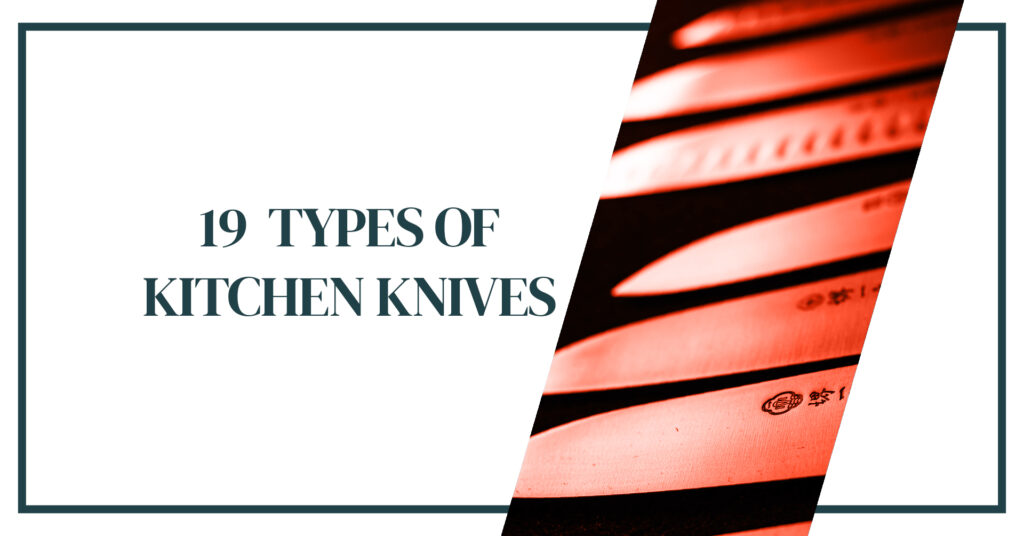
Nineteen types of kitchen knives, and you need five of them. That’s the whole guide in one sentence, and if you close the tab now you’ll have gotten the important part. The starting five: a chef’s knife, a paring knife, a bread knife, a santoku or nakiri, and a boning knife. Everything else on this page is the bench — genuinely useful in the right game, dead weight in your knife block the rest of the time.
Here’s the thing every retailer guide gets wrong. They hand you a numbered list of thirty blades like a restaurant menu, as if owning one of each makes you a better cook. It doesn’t. It makes you a person with a very full drawer. What actually helps is knowing the right knife for each job, why that type of knife suits it, and — the part nobody selling knives will say — which ones you can skip entirely.
The Short Answer
What Are the Main Types of Knives?
Kitchen knives are grouped by blade shape and the job each does. Three essentials cover most cooking: a chef's knife for chopping, a paring knife for detail, a bread knife for slicing. Supporting Western types (boning, cleaver) and Japanese blades (santoku, nakiri, yanagiba) each match a cutting motion to blade geometry.
Key Takeaways
- Nineteen exist, five earn a slot: chef's knife (or gyuto), paring knife, bread knife, a santoku or nakiri, and a boning knife. Buy those first, in that rough order.
- The rest are situational. A fillet knife is brilliant on fish and idle otherwise. A cleaver is glorious once a month. Own them when the job shows up, not before.
- Japanese vs. Western is geometry, not religion. Heavier curved Western blades want to rock; harder, flatter Japanese blades want to push. Neither is holier than the other.
- A sharp blade beats a specialized one. Half the single-purpose knives sold exist to solve problems a properly sharpened chef's knife already handles.
Every Knife Type at a Glance
Before the deep dives, here’s the whole roster on one screen — no scrolling through thirty numbered entries to find the one you want. Length figures are typical ranges; edge tells you the working motion.
| Blade length | Edge | Best for | |
|---|---|---|---|
| Chef's knife | 8 in (6–10) | Curved, plain | Chopping, slicing, dicing, mincing — 80% of prep |
| Gyuto (Japanese chef's) | 210mm (180–270) | Flatter, harder steel | Same jobs, lighter and keener |
| Paring knife | 3.5 in (2.5–4) | Straight point | Peeling, coring, hulling, in-hand detail |
| Petty (Japanese utility) | 120–150mm | Fine point | Bigger-than-paring detail work |
| Bread knife | 8–10 in | Serrated | Crusty loaves, tomatoes, cake — slicing without crushing |
| Boning knife | 5–6 in | Narrow, curve or straight | Breaking down poultry, deboning, trimming cuts of meat |
| Fillet knife | 6–8 in | Thin, flexible | Filleting fish, skinning |
| Utility knife | 4–7 in | Plain or serrated | Sandwiches, small produce, in-between jobs |
| Carving knife | 8–12 in | Long, plain | Slicing roasts and poultry into even cuts |
| Meat cleaver | 6–7 in | Thick, heavy | Splitting bone, hacking through joints |
| Chinese cleaver (caidao) | 7–8 in | Thin, tall | Cutting vegetables, slicing, scooping — not bone |
| Steak knife | 4–5 in | Plain or serrated | The table, not the prep |
| Kitchen shears | N/A | Two blades | Spatchcocking, herbs, packaging, everything |
| Santoku | 165–180mm | Flat, plain | Push-cut chopping, veg, boneless proteins |
| Nakiri | 165–180mm | Flat, square tip | Vegetables, clean straight-down chops |
| Kiritsuke | 210–240mm | Flat-to-angled | The show-off all-rounder for confident hands |
| Yanagiba (sashimi) | 240–300mm | Single bevel | Long single-stroke slices of raw fish |
| Sujihiki | 240–270mm | Slim, double bevel | Slicing and carving proteins, brisket, roasts |
| Deba | 165–210mm | Thick, single bevel | Breaking down whole fish, through small bone |
| Usuba | 180–210mm | Flat, single bevel | Precision vegetable work, paper-thin cuts |
Twenty rows, nineteen types (the gyuto is the chef’s knife’s Japanese twin, listed so you can see both). Notice how many “skip it if” cells basically say you already own the knife that does this. Hold that thought — it’s the whole POV of this page.
The Five Knives That Earn Their Slot
Forget the roster for a second. If you’re building a kitchen from zero, this is the starting lineup — the five that play every game. Everything else rides the bench until a specific matchup calls it in.
📸 PHOTO 1 — REPLACE WITH IMAGE
The “starting five” laid out together on Michael’s board, overhead, blades parallel: chef’s/gyuto, paring, bread, santoku (or nakiri), boning.
ALT: The five essential types of knives every kitchen needs — chef’s knife, paring knife, bread knife, santoku, and boning knife
1. The chef’s knife (or gyuto). The point guard. Runs the whole offense. An 8-inch chef’s knife with its slightly curved belly handles chopping, slicing, dicing, and mincing — the bulk of every meal you’ll ever cook. Its Japanese equivalent, the gyuto, does the same work with harder steel and a flatter profile. If you only ever buy one knife, buy a good version of this and learn to sharpen it. (Chef’s or gyuto? Our full gyuto vs. chef’s knife breakdown settles it.)
2. The paring knife. The specialist who owns the small game. A 3.5-inch blade held in your hand — peeling, coring, hulling strawberries, trimming, deveining, the fiddly work on small fruit and vegetables that a big blade fumbles. Cheap to buy, punches far above its price. Here’s what a paring knife is actually for if you want the full job list.
3. The bread knife. The one job no other blade does. A serrated edge saws through a crusty loaf and glides across a ripe tomato without crushing it flat. A plain edge cannot do this — it compresses before it cuts. There’s no substitute, which is exactly why it makes the five.
4. The santoku or nakiri. Pick one. A santoku knife is a flatter, lighter answer to the chef’s knife with a push-cut motion; a nakiri is a square-tipped vegetable machine. Either one changes how a pile of onions feels under your hand. You don’t need both — start with whichever suits your cooking, and read santoku vs. chef’s knife if you’re torn.
5. The boning knife. The one that saves you real money. A narrow, sometimes slightly curved blade that breaks down whole chickens and trims cuts of meat you’d otherwise pay a butcher to touch. It earns its slot the first time you buy a whole bird instead of parts. Curved or straight? Our curved vs. straight boning knife guide picks a side.
That’s the team. Chef’s, paring, bread, santoku-or-nakiri, boning. A home cook who owns these five and keeps them sharp can cook essentially anything. The other fourteen types are role players — brilliant in their moment, benchwarmers otherwise.
West vs. East: Why the Same Job Gets Two Knives
Here’s a question that trips people up: why does a chef’s knife and a gyuto both exist if they do the same jobs? Because they get there differently, and knowing how is what actually helps you choose.
Western knives — German, mostly — are heavier, softer steel, with a curved belly built to rock. Heel down, tip anchored, roll through the food. Forgiving, tough, happy to be abused. Japanese knives are harder steel taken to a keener, flatter edge, built to push straight down and lift. Sharper for longer, but they ask for a little more respect (chip one on a bone and you’ll learn fast).
📸 PHOTO 2 — REPLACE WITH IMAGE
Side profile of a German chef’s knife directly above a gyuto, edges toward camera, close enough to see the belly-curve difference.
ALT: Western chef’s knife and Japanese gyuto side by side showing the difference in blade curve and profile
| Western (German) | Japanese | |
|---|---|---|
| Steel hardness | ~56–58 HRC (softer, tougher) | ~60–63 HRC (harder, keener) |
| Edge angle | ~20° per side | ~15° or less per side |
| Weight | Heavier, front-balanced | Lighter, nimble |
| Cutting motion | Rock-chop along the curve | Push-cut, straight down |
HRC is Rockwell hardness — basically how hard the steel is. Higher numbers hold an edge longer but chip more easily; lower numbers dull faster but forgive mistakes. Does it matter in a real kitchen? A bit. If you rock-chop and hate maintenance, go Western. If you want scary-sharp and you’ll baby the blade, go Japanese. Neither camp is right. Anyone who tells you otherwise is selling something.
The Supporting Cast: Western Knives Worth Knowing
These are the bench players. Each is genuinely great at its job — the trick is knowing the job is narrow enough that most people don’t need the knife.
Utility knife The tweener. Longer than a paring knife, shorter than a chef’s, and for most people it’s a solution to a problem those two already solved. Fine for sandwiches and mid-size produce. Rarely essential.
Cleaver — and the two very different knives that share the name People treat “cleaver” as one thing. It’s two, and they could not be more different.
Meat cleaver (heavy): – For: splitting bone, hacking through joints, brute-force butchery – Against: useless for anything delicate; a specialist you’ll use monthly at most
Chinese cleaver / caidao (thin, tall): – For: cutting vegetables, slicing proteins, scooping the pile off the board with its broad face — a genuine all-rounder in skilled hands – Against: not for bone, despite the shape; thin edge, and it’ll chip if you treat it like its heavy cousin
📸 PHOTO 3 — REPLACE WITH IMAGE
Thin Chinese cleaver (caidao) next to a heavy meat cleaver, overhead, with an onion for scale.
ALT: Chinese vegetable cleaver next to a heavy meat cleaver showing the difference in blade thickness and weight
Carving knife Long, thin, plain edge, built to slice a roast or a turkey into even sheets in a single stroke. If you host holidays, it earns the drawer space. If you carve a roast twice a year, a sharp chef’s knife limps through fine.
Fillet knife Thin and flexible so it can follow the bones of a fish and lift clean fillets. Beautiful at exactly one thing. If you cook whole fish, buy it. If you don’t, this fillet knife is the definition of a bench player.
Steak knives The only knives on this list that live at the table, not the cutting board. Plain or micro-serrated, they cut cooked meat on the plate. Outfitting the kitchen? Not your priority yet.
Kitchen shears Not a knife, still one of the most-used tools in my kitchen. Spatchcocking a chicken, snipping herbs, opening the packaging that fights back. Buy a pair that comes apart to wash.
The Reality Check — the tomato knife. There’s a whole category of knife sold to solve a problem a sharp blade doesn’t have. The tomato knife is the poster child: a little serrated blade pitched as the only way to slice a tomato without crushing it. Sharpen your chef’s knife properly and the problem vanishes. Most “single-purpose” gadgets are dull-knife insurance. Fix the dullness instead.
The Japanese Bench: Specialists Worth Knowing
The Japanese side of the roster runs deep, and the internet is full of confident nonsense about it. Let’s get the types straight — and correct one error you’ll see repeated all over the place. For the full lineup, our Japanese knife types guide goes deeper than there’s room for here.
- Santoku — the “three virtues” knife: slice, dice, mince. Flat profile, lighter than a chef’s knife, double bevel. The gateway Japanese blade, and a superb one.
- Nakiri — square-tipped, flat-edged vegetable specialist. Straight-down chops, no rocking, clean through a cabbage. A double-bevel nakiri knife is one of the most satisfying tools you’ll own.
- Kiritsuke — the flashy all-rounder, a santoku-meets-yanagiba profile traditionally reserved for the head chef. Looks incredible, demands good technique. Not a beginner’s knife.
- Yanagiba (sashimi knife) — long, slim, single bevel, built for one perfect pull-stroke through raw fish. Single-purpose royalty.
- Sujihiki — the Japanese slicer, a leaner double-bevel take on the carving knife. Brisket, roasts, salmon sides.
- Deba — thick, heavy, single bevel, for breaking down whole fish and cutting through small bones. Not a general knife.
- Usuba — the single-bevel vegetable specialist for precision, paper-thin cuts, and pro-level garnish. Beautiful and unforgiving.
📸 PHOTO 4 — REPLACE WITH IMAGE
Edge-on macro of a single-bevel blade (yanagiba or usuba) vs a double-bevel santoku — the asymmetric grind visible.
ALT: Single-bevel Japanese knife edge compared to a double-bevel santoku edge, shown in close-up
Single bevel vs. double bevel, plainly. A double-bevel edge is ground on both sides, like a “V” — the santoku, nakiri, gyuto, and most knives you’ll ever own. A single bevel is ground on one side only, flat on the back, like a chisel: the yanagiba, usuba, and deba family. Single bevels cut with unreal precision but steer to one side and need specific sharpening skill. So let’s kill a myth some sites keep repeating: the santoku is a double-bevel knife. If a page tells you a santoku is single bevel, close the page — they’ve mixed up the everyday chopper with the sushi specialists.
Beyond the Kitchen: The Other Knife Families
The word “knife” is bigger than the kitchen, and if you searched broadly you deserve an honest map — not us pretending expertise we don’t have. There are three other big families:
- Pocket / EDC knives — folding blades you carry every day, for opening boxes, cutting cord, and a hundred small tasks. A different world of steels, locks, and clips.
- Hunting / outdoor knives — fixed blades for field dressing, bushcraft, and camp work. Built tough, made to baton wood and dress game.
- Utility / work knives — box cutters, trade knives, the disposable-blade workhorses.
They matter, they’re fascinating, and they’re not our lane. ChoppnKnives lives on the kitchen side of the line, where I’ve actually put in the hours. If you came here for a combat or survival blade, I’d only be guessing — and you deserve someone who isn’t.
HANDS-ON
On the Board: What I Actually Reach For
I own more knives than any reasonable person needs. That’s the qualification and the confession. So here’s the honest version of which of these nineteen types actually get used in my kitchen in a normal week — and which have gathered dust despite my being sure, at purchase, that they’d change my life.
[PHOTO-5: Michael’s actual knife block / magnet strip as it really looks, un-styled, honest wear visible, daily drivers front and center. ALT: A home cook’s real knife storage showing the kitchen knife types used most often]
Last week the tally was honest and a little embarrassing. My 210mm gyuto did roughly eighty percent of everything — onions, herbs, chicken thighs, a whole squash I had no business cubing that fast. The paring knife came out for coring tomatoes and hulling a punnet of strawberries. The bread knife earned its keep on a sourdough boule and, twice, on tomatoes when the paring knife was in the sink. The nakiri knife handled a mountain of cabbage for slaw and made me look competent. And my boning knife — the one I keep calling essential — hasn’t left the knife block since I broke down a chicken back in May. Two months. It’s essential right up until it isn’t.
The onion pile is where I feel the West-vs-East thing in my wrist. My German chef’s knife wants to rock — heel planted, tip down, rolling through — and on three onions that curve is lovely. But faced with a full dice for a pot of chili, I reach for the santoku or the nakiri every single time. The flat profile lets me push straight down, lift, shift, push again. No rocking, no rounded ends left half-cut, no chasing a stray crescent around the cutting board. The pile just disappears, and my knuckles stay calmer doing it. Once the push-cut clicks, the rock-chop starts to feel like extra motion for the same result.
Most of my drawer isn’t knives I need. It’s knives I was convinced I needed — by someone selling knives. The knife I most believed in and quietly abandoned was a tomato knife. I bought it certain I’d been slicing tomatoes wrong my whole life — the little forked tip, the micro-serrations, the confident sales pitch. It was genuinely great for about three weeks. Then I stropped my chef’s knife properly one Sunday and realized a truly sharp eight-inch blade glides through ripe tomato skin without crushing it, no problem. The tomato knife now lives in the drawer nobody opens. What replaced it wasn’t a better knife. It was a sharper version of one I already owned — which is the lesson that runs under this whole page.
The Final Cut
Somewhere along the way we started treating knife collections like proof of skill — as if the cook with thirty blades must know something the cook with five doesn’t. Flip that around. The real skill is knowing which five you need and keeping them sharp enough that the other fourteen never come up. A dull drawer full of specialists loses to two sharp knives every night of the week.
So don’t overthink it. Get the chef’s knife, the paring knife, the bread knife, one flat Japanese blade, and a boning knife. Learn to sharpen them. Add a specialist only when a real job — a whole fish, a holiday roast — walks into your kitchen and asks for it. That’s not a smaller collection than the guides push. It’s a smarter one.
Now go cut something.
What the FAQ
What are the 7 types of knives?
The seven that cover almost all home cooking: 1) chef’s knife, 2) paring knife, 3) bread knife, 4) utility knife, 5) boning knife, 6) santoku, and 7) carving knife. Own the first five and you’re set for essentially any meal; the last two earn their place as you cook more.
What are the 8 basic types of knives?
Add one to the seven above: 1) chef’s knife, 2) paring knife, 3) bread knife, 4) utility knife, 5) boning knife, 6) santoku, 7) carving knife, and 8) fillet knife. That’s the standard eight-piece spread most knife-block sets are built around — though most cooks only use half of them regularly.
What are the 7 essential knife types and their uses?
Chef’s knife (chopping, slicing, dicing), paring knife (peeling and in-hand detail), bread knife (crusty loaves and tomatoes), boning knife (breaking down meat), santoku (push-cut vegetable and protein work), utility knife (mid-size in-between jobs), and carving knife (slicing roasts evenly). Five are must-haves; two are nice-to-haves.
What are different names for knives?
By kitchen type: chef’s knife, gyuto, paring knife, petty, bread knife, boning knife, fillet knife, utility knife, carving knife, slicing knife, cleaver, santoku, nakiri, kiritsuke, yanagiba, sujihiki, deba, usuba. Beyond the kitchen, “knife” also covers pocket, hunting, and utility blades — a real answer beats a thesaurus of synonyms.
What are the names of knives?
The core kitchen names to know: chef’s knife (and its Japanese twin, the gyuto), paring knife, bread knife, boning knife, fillet knife, utility knife, carving knife, cleaver, plus the Japanese specialists — santoku, nakiri, kiritsuke, yanagiba, and usuba. Learn these fourteen and you can name almost any blade on a kitchen wall.
What are the top 10 kitchen knives?
By usefulness: 1) chef’s knife, 2) paring knife, 3) bread knife, 4) santoku, 5) boning knife, 6) nakiri, 7) utility knife, 8) carving knife, 9) fillet knife, 10) kitchen shears. The first five do the daily work; the rest fill in as your cooking widens. You do not need all ten to cook well.
Which Five Knives Does Your Kitchen Actually Need?
Nineteen types, five that matter — but which five for your cooking? Try the 60-second Knife Finder tool and get a starting lineup matched to what you actually make for dinner.