// Affiliate disclosure: some of the links in this post are affiliate links, which means we may earn a small commission if you buy through one, at no extra cost to you. And if you do, that money goes straight to our knife problem (or beer money, let's be honest).
You own a paring knife and a chef’s knife. So why does half the internet insist you’re missing a third one?
That’s the petty knife’s whole problem. It shows up in every “essential Japanese knives” list, every knife-shop pitch, every Reddit thread where someone’s trying to justify their last purchase — and nobody ever quite explains what it does that your two existing knives don’t. It sounds like a solution to a problem you didn’t know you had.
Think of your knife block as a wardrobe. The chef’s knife is the good coat — the statement piece you’d never leave the house without. The paring knife is the pair of gloves, tiny and specific. The petty is the mid-layer nobody photographs: not flashy, quietly worn more days than either of the other two, doing the unglamorous work of covering the gap. Here’s exactly what that gap is, and whether it’s big enough in your kitchen to bother filling.
The Short Answer
What Is a Petty Knife Used For?
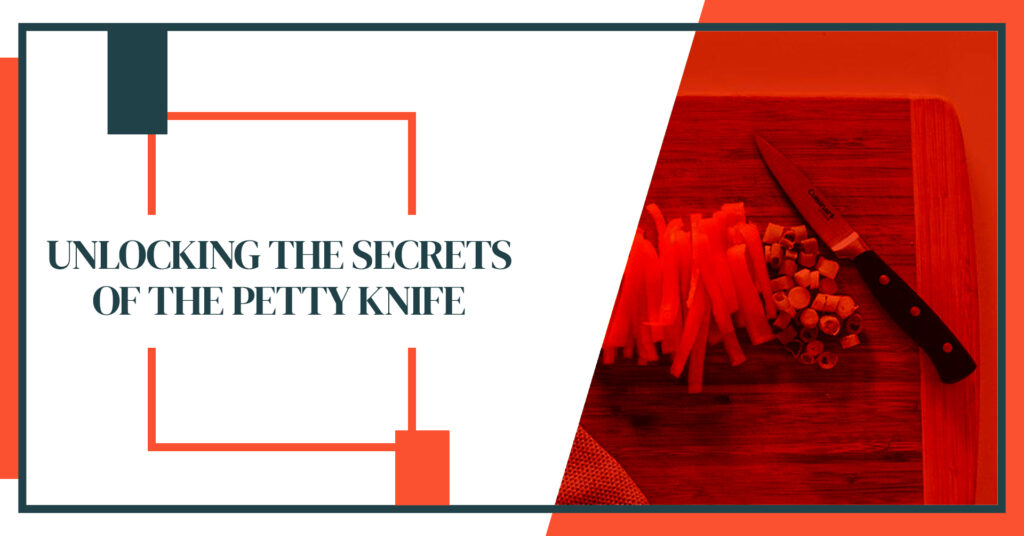
A petty knife is used for in-hand jobs like peeling, coring, and hulling, plus precise cutting-board work like mincing shallots or trimming small proteins. A 4-to-6-inch (120–150mm) Japanese utility blade between a paring knife and a chef's knife, it covers small tasks through both in-hand control and board precision.
Key Takeaways
- Size: most petty knives run 120–150mm (roughly 4.75–6 inches). A 90mm is basically a big paring knife; a 150mm petty edges toward a small chef's knife.
- The whole point: it works both in your hand (peeling, coring) and on the cutting board (mincing, trimming) — the paring knife only really does the first, the chef's knife only the second.
- vs. a paring knife: same idea, longer blade. A petty is larger than a paring knife, so it reaches across a board a stubby paring blade can't.
- Who it's for: anyone who cooks for one or two, or who's tired of hauling out an 8-inch chef's knife for a single shallot.
- The honest verdict: genuinely useful, but for a narrower reason than the shops tell you. More below.
The Jobs a Petty Actually Does
The reason “what is a petty knife used for” is a confusing question is that the answer lives in two different places: your hand and your cutting board. Most kitchen knives pick a side. The petty is the versatile knife that refuses to.
In-Hand Prep (Off the Board)
This is the half a santoku or gyuto can’t touch. Pick the food up, work it in the air, let the blade do close, delicate tasks with the food held against your thumb:
- Peeling apples, pears, ginger, a stray potato — the petty’s pointed tip and thin blade steer around curves the way a paring knife does, just with a bit more reach.
- Coring tomatoes and hulling strawberries — the tip digs in and twists out the core or the green top in one motion.
- Deveining shrimp and segmenting citrus — precise, close, in-hand work where you want to feel exactly where the blade is.
The extra blade length over a paring knife sounds like it’d get in the way here. Mostly it doesn’t — and on anything longer than a strawberry, that reach is an asset.
On the Board (Where the Paring Knife Taps Out)
Now put it down on the cutting board and it turns into a mini chef’s knife:
- Mincing garlic, shallots, and a small handful of herbs without dragging out the big blade.
- Slicing a single tomato, a couple of mushrooms, half an onion — the small-batch prep that makes a full-size knife feel like overkill.
- Trimming fat and silverskin off small cuts of meat, where the pointed tip slides under the membrane like a stubby boning knife.
A paring knife can’t do this row. Its blade is too short to slice cleanly across a board, and you end up sawing. The petty has just enough length to push-cut and just enough tip to get precise. That dual-use is the entire pitch.
📸 PHOTO 2 — REPLACE WITH IMAGE
Petty on the board mincing garlic or shallot next to a chef’s knife for scale — shows why you’d reach for the smaller blade.
ALT: Petty knife mincing shallots beside a chef’s knife on a wood board
📸 PHOTO 4 — REPLACE WITH IMAGE
Close-up of the petty’s double-bevel edge and pointed tip trimming silverskin from a small cut of meat.
ALT: Petty knife trimming silverskin from meat showing its pointed tip
Does a home cook actually need a knife that does both? If you cook for four every night and already flow between a chef’s knife and a paring knife without thinking, honestly — maybe not. The petty earns its keep in the small kitchen and the small job, not as a replacement for either neighbor. Keep that in your pocket while you read the rest.
Petty vs. Paring vs. Utility (and Where the Chef’s Knife Wins)
Everyone compares the petty to one other knife and leaves you to work out the rest. Here’s all three small blades in a single reference — plus the point where you should just grab the chef’s knife instead.
| Paring knife | Petty knife | Utility knife | |
|---|---|---|---|
| Blade length | 2.5–4 in (65–100mm) | 4.75–6 in (120–150mm) | 5–7 in (130–180mm) |
| Origin | Western | Japanese | Western (the petty is its Japanese cousin) |
| In-hand work | Excellent | Good | Clumsy |
| On the board | Poor (too short) | Good | Fine |
| Best at | Peeling, coring, hulling small produce | Small-batch board work *and* in-hand prep | Sandwiches, mid-size slicing |
| When it's overkill | Nothing — it's already tiny | Big piles of onions, dense squash | Delicate detail work |
The petty and utility knives are close relatives — a petty is essentially the Japanese take on the western utility knife, usually with thinner stock, a harder steel type, and a sharper factory edge. The difference that matters: a petty holds a keener edge for delicate tasks, where a standard western utility knife trades some sharpness for toughness.
And the chef’s knife? It wins the moment volume or force enters the picture. A pile of onions, a butternut squash, anything that needs knuckle clearance and a tall blade — that’s a gyuto or a Western chef’s knife, not a petty. Try to mince a full mise en place with a 150mm petty and you’ll finish eventually, resentfully. The petty is the mid-layer, remember. Ask it to be the coat and you’ll get cold.
Is a Petty Knife Worth It?
Here’s the honest answer the knife shops won’t give you straight, because “maybe not” doesn’t move product: yes, but for a narrower reason than they tell you.
Buy one if: – You cook for one or two people, where a full chef’s knife is genuinely too much blade for most of what you make. – You hate wrangling an 8-inch knife for small jobs — one shallot, a clove of garlic, half a tomato. – You already peel and core in your hand and want more reach than a stubby paring knife gives you. – You like the idea of one knife covering both in-hand and light board work without a switch.
Skip it (for now) if: – Your paring knife and chef’s knife already flow together without friction — the petty slots into a gap you don’t have. – You do big-batch prep most nights. You’ll live on the chef’s knife anyway. – You’re buying your first couple of knives. Chef’s knife first, paring knife second, petty a comfortable third.
The petty knife is a must-have in exactly one situation: your cooking skews small and precise, and the constant reach-for-the-big-knife dance annoys you. If that’s your kitchen, it’ll quietly become the blade you grab most. If it isn’t, no shame in waiting.
What Size Petty Should You Get?
Blade length is where people overthink it. The sweet spot is 120–150mm, and here’s the plain version of what changes across that range:
- 90mm: basically a long paring knife. Great in the hand, too short for real board work. Skip it unless you specifically want an in-hand specialist.
- 120mm: the nimble all-rounder. Light, precise, brilliant for in-hand jobs and small mincing. The safe first petty.
- 150mm petty: edges toward a small chef’s knife. More board authority, still small enough to feel like a petty. If you want one knife to lean on, this is it.
Go longer than 150mm and you’ve basically bought a short gyuto — which is a fine thing to own, just not what “petty” is solving. My blunt take: if it’s your first one, get a 150mm. The shorter blade feels safer in the shop; the longer blade earns its place faster on the counter.
📸 PHOTO 3 — REPLACE WITH IMAGE
Three blades laid flat and labeled — paring (~85mm), petty (~150mm), gyuto/chef’s — the size continuum in one frame.
ALT: Paring knife, petty knife, and chef’s knife lined up to compare blade lengths
Where the Name Comes From
Quick one, because it actually explains the knife. “Petty” is a mangling of the French word petit — small — from couteau petit, the little office knife (the french office knife) that Western cutlery has used forever. When Japanese makers built their own version during the Meiji-era rush to adopt Western tools, the name came along with the shape.
The gyuto is literally the “beef knife.” The petty is literally the “small one.” Japanese knife naming is refreshingly honest about what it’s selling you. So a petty is, etymologically, just a small knife — the Japanese answer to the western paring and utility knives rolled into one. Some come with a traditional Japanese wa-style handle (that light, often octagonal wooden grip); most home-cook versions wear a Western handle. Steel runs the range: easy-going stainless steel on budget models, harder carbon steel or powder steels on the ones knife nerds fight about. That’s the whole history. No mystique, just a small blade with a French name and a Japanese accent.
HANDS-ON
On the Board (What It’s Actually Like)
Here’s the lived version — what the petty actually replaced in my kitchen once one moved onto the counter, and where it still frustrates me.
The petty is the knife that stopped me hauling out the big board for tiny jobs. Cooking for two on a weeknight, I used to grab the chef’s knife on reflex, then spend as long wiping down a 12-inch board as I did cooking. Now a 150mm petty and a small board handle the shallot, the clove, the half a lemon — the whole quiet cleanup-to-cooking ratio flipped. It lives on the counter now. The paring knife went back in the drawer and I don’t miss reaching for it.
The honest limitation: it hits a wall the second there’s volume or density. I tried to power through a butternut squash with it once — the blade’s too thin and there’s no knuckle clearance, so I was cramming my fingers against the board and getting nowhere. Same with a big pile of onions; ten minutes in, my hand’s tired and I’m wishing I’d just grabbed the gyuto. The petty rewards small and precise and punishes brute force. That’s the trade, and it’s a fair one.
In-hand, peeling an apple with a petty versus a stubby paring knife surprised me — the extra blade length reads like a liability for rounded work and mostly isn’t. You choke up near the tip and the reach actually helps you take a longer, smoother ribbon of peel. The one place the paring knife still wins outright is the really tight curve, hulling a small strawberry, where a short blade turns inside the fruit better. For everything bigger than a berry, the petty’s reach is the asset.
The Final Cut
The petty is the mid-layer of the knife wardrobe — never the piece you brag about, always the one you quietly wear the most.
Now go cut something.
What the FAQ
Is a Petty Knife Right for You?
Not sure if a petty is the knife your kitchen’s missing — or if a paring knife or gyuto fits your cooking better? Try the 60-second Knife Finder tool and we’ll point you to the blade that earns its spot on your counter.