// Affiliate disclosure: some of the links in this post are affiliate links, which means we may earn a small commission if you buy through one, at no extra cost to you. And if you do, that money goes straight to our knife problem (or beer money, let's be honest).
Some links here are affiliate links. If you buy through one, I may earn a small commission at no extra cost to you.
The Short Answer
What Is a Sujihiki Knife Used For?
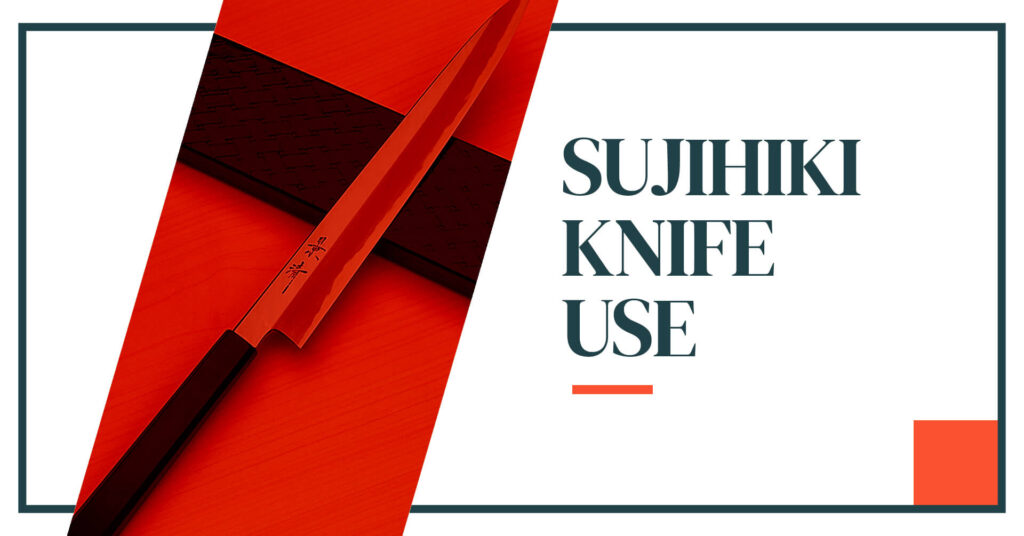
A sujihiki knife is a long, thin Japanese slicing and carving knife built to cut boneless proteins — roasts, brisket, poultry, fish — into clean, uniform slices. Its slender double-bevel blade runs from 240mm to 300mm, letting you draw the edge through meat in a single smooth stroke with minimal drag.
Key Takeaways
- What it is: the Japanese take on a carving knife — a long, narrow, double-bevel slicer whose whole job is boneless protein.
- Who it's for: the cook who already owns a good chef's knife and carves roasts, whole fish, or big cuts often enough to want a dedicated blade for it.
- Who should skip it: anyone still building the basics. It's a specialist, not a first knife, and your gyuto already slices most of what you throw at it.
- The verdict: brilliant at one thing, idle the rest of the week. Worth it when you know you'll use it — a want, not a need.
My sujihiki sat in the block for the better part of a year doing absolutely nothing. I’d bought it the way I buy most knives — a late-night “this’ll change everything” purchase, a beautiful long blade with a wood handle, ordered before I’d asked myself a single practical question. It arrived. I admired it. Then every single night I reached past it for my gyuto.
Here’s the analogy that finally made it click. A gyuto is the rhythm section — shows up for every song, holds the kitchen together, never asks for a solo. A sujihiki is the solo instrument you bring out for one piece. When that piece comes around — the holiday roast, a whole side of salmon, carving for a table of eight — nothing else in the drawer sounds right. The rest of the time it sits backstage. That’s not a flaw. That’s the job. I just had to stop expecting a soloist to play rhythm.
What Makes a Sujihiki Different
The word sujihiki translates, roughly, to “muscle puller” or “sinew slicer” — suji meaning the sinew and connective tissue, hiki meaning to pull or draw. That etymology tells you the whole design brief in one word. This is a knife built to draw cleanly through flesh, not to chop, rock, or hack.
Physically, it’s the Japanese answer to a Western carving knife: a long, slender, double-bevel blade with a low profile — short from spine to edge, so there’s very little steel dragging through your food. Length runs from 240mm to 300mm. That reach matters, because a proper slice is one continuous pull from heel to tip, not a sawing motion. The longer the blade, the fewer passes, and the cleaner the face of the meat.
The sujihiki is sharpened on both sides of the edge, like a Western knife — unlike a traditional single-bevel yanagi, which is ground on one face only. In plain terms: a double-bevel blade is easier to sharpen, easier to use right-or-left-handed, and far more forgiving for a home cook. You give up a sliver of the yanagiba’s ultimate glide, but you get a knife you can actually maintain without a lifetime of practice. For most people that’s the right side of the single-vs-double-bevel trade-off.
📸 PHOTO 3 — REPLACE WITH IMAGE
Close-up of the sujihiki’s double-bevel edge and thin blade profile, angled to light.
ALT: Close-up of a sujihiki double-bevel edge and thin blade profile
What You Actually Cut With It
It’s a slicer, full stop. Everything it does well involves taking a boneless piece of protein and turning it into neat, uniform slices with minimal resistance. The list:
- Cooked roasts — brisket, prime rib, pork loin, leg of lamb. Home turf. One long draw and a slice falls away clean-faced.
- Poultry — carving a roast chicken or turkey off the bone (around the bone, never through it).
- Raw fish for sashimi and sushi — the double-bevel edge slices fish cleanly enough for crudo and home sushi. Not the traditionalist’s single-bevel pick, but genuinely capable.
- Filleting fish — a slender blade portioning a side of salmon, skinning fillets, cleaning up trim.
- Cured meats and cold cuts — ham, prosciutto, smoked salmon sliced thin enough to read a newspaper through.
The through-line: no bones, no hard cores, no leverage cuts. The blade is thin and the edge is fine, and its cutting performance depends on that. The single drawing stroke does the work — you’re guiding the knife, not forcing it. Push it like a cleaver and you’ll chip that lovely edge in a hurry.
Sujihiki vs Yanagiba vs Gyuto vs Western Carver
Every collection page online will tell you a sujihiki is “like a yanagiba but double-bevel” and leave it there. That’s true and useless. Here’s the whole picture in one table.
| Sujihiki | Yanagiba | Gyuto | |
|---|---|---|---|
| Job | Slicing boneless protein | Slicing raw fish / sushi | All-purpose chef's knife |
| Bevel | Double | Single | Double |
| Motion | One long drawing pull | One long drawing pull | Rock, push, slice — everything |
| Blade profile | Long, thin, low height | Long, thin, single-ground | Taller, curved belly |
| Maintenance | Easy — sharpen both sides | Hard — single-bevel skill | Easy |
| Best for | Home cook who carves often | Sushi purist | Literally everyone |
The sujihiki’s pitch is right there in the middle: the yanagiba’s slicing geometry without the single-bevel maintenance headache, and a cleaner, longer, lower-drag cut than a Western carver. If you want the full breakdown of the single-bevel cousin, the yanagiba vs sujihiki comparison goes deep on when tradition actually earns its keep.
Sujihiki vs Gyuto: Do You Need Both?
This is the question buyers actually have, and almost nobody answers it honestly. So here it is: your gyuto already slices.
A gyuto — the Japanese chef’s knife — is versatile by design. It chops, it dices, and yes, it slices a roast perfectly well for most dinners. The sujihiki isn’t better because the gyuto is bad at slicing. It’s better because it’s specialized — longer reach, lower blade height, less drag on the big cuts where a 210mm chef’s knife runs out of length and starts sawing.
A sujihiki doesn’t do a job your gyuto can’t. It does one job your gyuto does better than well enough — and only if you do that job often. So the honest answer: you don’t need both. You want both if you carve big cuts regularly and the difference between one clean pull and three sawing passes actually matters to you. If it doesn’t, keep the gyuto and spend the money on something you’ll use every day.
What Size Sujihiki Should You Get?
Length is the one spec that changes how this knife feels in real use. The sujihiki range from 240mm to 300mm covers three honest use-cases.
| Size | Who it’s for | Reality |
|---|---|---|
| 240mm | Small kitchens, smaller hands, cooks who mostly portion fish and medium cuts | Nimble and easy to store. Can feel short on a full brisket. |
| 270mm | The all-rounder — the size most home cooks should default to | Long enough for big roasts, still manageable on a home board. The sujihiki 270mm is the safe pick. |
| 300mm | Carving showpieces, whole sides of salmon, feeding a crowd | Glorious reach, one-pull slices — but it needs board space and a bit of confidence. |
If you’re not sure, get the 270mm. (You’ll also see the odd 230mm out there; treat it as a compact 240.) Kitchen-space reality matters more than internet bravado here — a 300mm slicer is spectacular right up until you try to wash it in a standard sink.
What Steel to Look For
“Best steel for a sujihiki” gets asked constantly, and it matters more here than on most knives, because a slicer lives at a low angle and depends entirely on a keen, thin edge. The plain-language version:
- Stainless steel — low-maintenance, resists rust, forgiving. Slightly less edge retention than carbon, but for a knife that mostly slices soft protein that’s a non-issue. The right call for most people.
- Carbon steel — takes a scary-sharp edge and holds it. The catch: it rusts if you look at it wrong. Wipe it dry after every use or don’t buy it.
- Semi-stainless — the middle ground. Most of carbon’s sharpness, most of stainless’s manners.
You’ll see a lot of Damascus slicers. The wavy pattern is layered cladding around a core steel (often VG-10), and it’s mostly cosmetic — it looks stunning and does almost nothing for cutting performance. VG-10 itself is a genuinely good stainless core: sharp, easy to sharpen. Fair steel. Just know you’re paying for the pretty pattern, not the edge.
Whichever you pick, keep it dry, store it in its saya (the wooden sheath that protects the long edge), and learn to sharpen it — a slicer that’s gone dull is just an awkward, expensive butter knife.
How to Use a Sujihiki (the Drawing Cut)
There’s exactly one technique to learn, and it’s the opposite of how most people use a knife.
1. Guide hand back. Curl your non-knife hand into a claw and rest the food gently — you’re steadying it, not gripping and pulling. 2. Start at the heel. Place the heel of the blade on the far edge of the cut, near the handle. 3. Draw the whole blade through in one pull. Long, smooth, heel-to-tip, letting the length do the slicing. One stroke per slice. Let the edge glide. 4. Don’t saw, rock, or press. If you’re pushing down or seesawing back and forth, the knife is too short, too dull, or you’re rushing. A clean slice is nearly effortless.
What not to cut: bones, joints, frozen anything, hard squash, or crusty bread. A sujihiki is a finesse tool. Ask it to do a cleaver’s job and you’ll chip the edge and possibly your knuckles.
📸 PHOTO 2 — REPLACE WITH IMAGE
Sujihiki laid alongside a gyuto and a yanagiba on the board, top-down, showing the length and narrow-height difference.
ALT: Sujihiki knife next to a gyuto and yanagiba showing blade-length difference
Is a Sujihiki Worth It?
The question that brought most people here, so no fence-sitting. A sujihiki is worth it for the right cook, and a waste of a good knife slot for the wrong one.
Buy one if: – You already own a solid gyuto and you carve roasts, whole fish, or big proteins often enough to feel that chef’s knife running short. – You portion raw fish for sushi or crudo at home and want cleaner slices than a chef’s knife gives. – You cook for crowds — holidays, dinner parties, a smoker in the backyard — where slicing a brisket well actually shows on the plate.
Skip it (for now) if: – You’re still building your core kit. Get a great gyuto, a bread knife, and a paring knife sorted first. – Your gyuto already handles every slice you ask of it and you’ve never once thought “I wish this blade were longer.” – You mostly cook for one or two and rarely carve a big cut. A sujihiki will sit idle, and idle knives are just guilt with a wood handle.
A sujihiki is a want, not a need — and there’s nothing wrong with a want, as long as you know that’s what it is when you buy it. (I did not. See above.)
HANDS-ON
On the Board
Here’s the lived version — what this knife is actually like once it’s out of the box and into a real dinner.
The first brisket I carved with the 270mm instead of my 210 gyuto, the difference was almost embarrassing. With the gyuto I’d been taking three little sawing passes per slice and leaving a ragged, stepped face on the meat. The sujihiki took each slice in a single draw — heel to tip, one motion — and the cut face came off smooth as glass. Same brisket, same me, better tool. I felt slightly stupid for waiting a year.
I’ll be honest about how often it actually comes out, because nobody else will: not much. Most weeks it doesn’t leave the block once — my chef’s knife covers everything a Tuesday dinner needs. It earns its keep maybe six or eight times a year: the Christmas roast, a side of salmon I’m portioning for the freezer, the summer brisket, carving for a full table. Those nights it’s the only knife I want. The rest of the time it sits there looking pretty and reminding me I have a spending problem.
First time I sliced sashimi with it I braced for disappointment — I’ve read enough purists insisting only a single-bevel yanagiba will do. They’re not wrong that a true yanagi glides a hair cleaner through raw fish. But for a home cook portioning salmon for dinner, the double-bevel was good enough that I stopped noticing, and I can actually sharpen the thing myself. That trade — a sliver of glide for a knife I can maintain — I’d make every time.
The Final Cut
A sujihiki isn’t the knife that makes you a better cook. It’s the knife you earn once you already are one — once your gyuto feels like an extension of your hand and you’ve started noticing the specific jobs it does merely well instead of brilliantly. That’s when a slicer stops being an impulse buy and starts being the obvious next instrument.
So don’t rush it. Get the fundamentals handled, get a chef’s knife you love, and let the sujihiki wait until you’ve got a roast in front of you and a real reason to want one long, clean pull instead of three. When that day comes, you’ll know. And the first slice will feel exactly like it should.
Now go cut something.
What the FAQ
What is a sujihiki knife used for?
Slicing boneless protein into clean, uniform pieces: cooked roasts and brisket, poultry carved off the bone, cured meats, and raw fish for sashimi or sushi. It’s the Japanese slicing knife equivalent of a Western carving knife — long, thin, and made for one smooth drawing cut.
What is the difference between a yanagiba and a sujihiki?
The bevel. A yanagiba is single-bevel (sharpened on one face only) and built for traditional sushi work; a sujihiki is double-bevel, like a Western knife. That makes the sujihiki far easier to sharpen and use for a home cook, at the cost of a tiny bit of the yanagiba’s ultimate glide through raw fish.
Is a sujihiki worth it?
If you already own a good chef’s knife and carve big cuts or portion fish often, yes — it slices roasts and fish cleaner than a gyuto can. If you’re still building your basics or rarely carve, skip it. It’s a specialist that sits idle in most home kitchens, so buy it as a want, not a need.
What is a sujihiki knife for sushi?
A capable, low-maintenance alternative to a yanagiba. The double-bevel edge slices raw fish cleanly enough for home sushi and sashimi. A purist will still reach for the single-bevel yanagiba for the finest cuts, but for most home cooks the sujihiki is easier to own and sharpen.
What should you not cut with a Japanese knife?
Bones, frozen food, hard squash, and crusty bread — anything that needs force or leverage. Thin Japanese blades like the sujihiki are ground fine for slicing, not chopping through hard material, and forcing them chips the edge. Keep it to boneless protein and soft ingredients.
What is the best steel for a sujihiki?
Stainless (like VG-10) for low-maintenance sharpness that resists rust — the right call for most people. Carbon steel takes and holds a keener edge but rusts without careful drying. Semi-stainless splits the difference. On a slicer, a fine edge matters more than on any other knife, so pick a steel you’ll actually keep sharp.
Does a sujihiki earn a slot in your block?
Not sure a specialist slicer belongs in your block before you’ve nailed the basics? Try the 2-minute Knife Finder tool — it’ll tell you whether a sujihiki earns its place or whether your gyuto’s already got it covered.